

A crypto checkout button doesn’t make every gift-card platform a marketplace. A crypto gift card marketplace is defined by how the transaction is structured, not simply by whether you can pay with crypto. That difference affects who supplies the card, how offers are presented, and what safeguards apply to the exchange.
When comparing platforms, start with practical questions: Is this a peer-to-peer offer or a direct checkout? Can the card be redeemed in the recipient’s country and on their account? What rate and fees apply, how will the card be delivered, and what transaction safeguards are explained? A low headline price is only one part of the comparison.
This guide explains the marketplace model and gives you clear criteria for assessing a listing before you transact. It also shows where VouchNode fits: a global peer-to-peer marketplace that promotes transparent escrow, instant gift-card delivery, dynamic rates, and low processing fees. Global access doesn’t mean every card works everywhere, so issuer redemption terms still matter. Use the steps ahead to assess the transaction, check the card’s fit, and compare your options with more clarity.
Key Takeaways
- A crypto gift card marketplace can use peer-to-peer listings, unlike direct checkout from a retailer’s own inventory.
- Follow the transaction from listing terms through payment and delivery, and note where platform safeguards apply.
- Compare the card, redemption region, displayed rate, fees, delivery, and safeguards. The lowest displayed rate may not be the best overall fit.
- Before selecting a listing, match its issuer, denomination, and redemption territory to the intended use.
- VouchNode combines a peer-to-peer marketplace model with transparent escrow, instant gift-card delivery, dynamic rates, and low processing fees.
What Is a Crypto Gift Card Marketplace? How Is It Different?
A crypto gift card marketplace connects buyers and sellers through crypto payments. The marketplace brings offers and transactions together, while each gift card remains subject to its issuer’s terms. Crypto is the payment method. It doesn’t change where the card can be redeemed, which account can use it, or the issuer’s restrictions.
That distinction shapes the purchase. A gift card is a stored-value product issued for use under specific terms. For a foundation on the card itself, see What is a Gift Card? In a crypto gift card marketplace, payment rules and redemption rules are separate parts of the transaction.
How a peer-to-peer gift card marketplace is structured
Think of a listing as an offer from a seller, rather than a product supplied directly from a retailer’s shelf. The buyer chooses a card listing, reviews its details, pays with crypto, and follows the stated delivery instructions. The seller provides the offer; the buyer selects and pays; the marketplace provides the platform and transaction rules.
Check the listing for the brand, denomination, redemption territory, delivery format, and any stated conditions. These details define what you’re buying. Platform rules shape how offers and transactions are presented. Some marketplaces also describe safeguards such as transparent escrow. Review the platform’s explanation to understand how its process works instead of assuming particular escrow conditions or release steps.
Marketplace versus direct crypto checkout
The main difference is who supplies the card. In a peer-to-peer marketplace, a seller posts an offer and buyers choose from available listings. In a direct crypto checkout, the retailer or storefront sells from its own catalogue and accepts crypto as payment. Either route can provide a digital gift card, but the transaction structure differs.
A marketplace may give buyers a choice among offers for a card type, while a direct storefront presents products managed by that business. Neither setup guarantees that a card suits your needs. A marketplace listing might match the brand but not the recipient’s country. A direct storefront may offer a simple checkout, but the issuer’s restrictions still apply. Read the card terms before paying.
A marketplace can describe its catalogue as global, but that describes access to offers, not universal redemption. Issuers may limit a card to a country, currency, or eligible account. For example, a card listed on a global platform may still be unusable by a recipient whose account is registered in another territory. Treat marketplace reach and issuer acceptance as separate checks.
VouchNode is a global peer-to-peer marketplace for gift cards and other digital goods. In this model, the platform connects marketplace participants, while each card remains subject to its issuer’s redemption terms. Understanding that distinction helps you assess the offer, not just the payment button.
How a Crypto Gift Card Marketplace Transaction Moves from Listing to Delivery
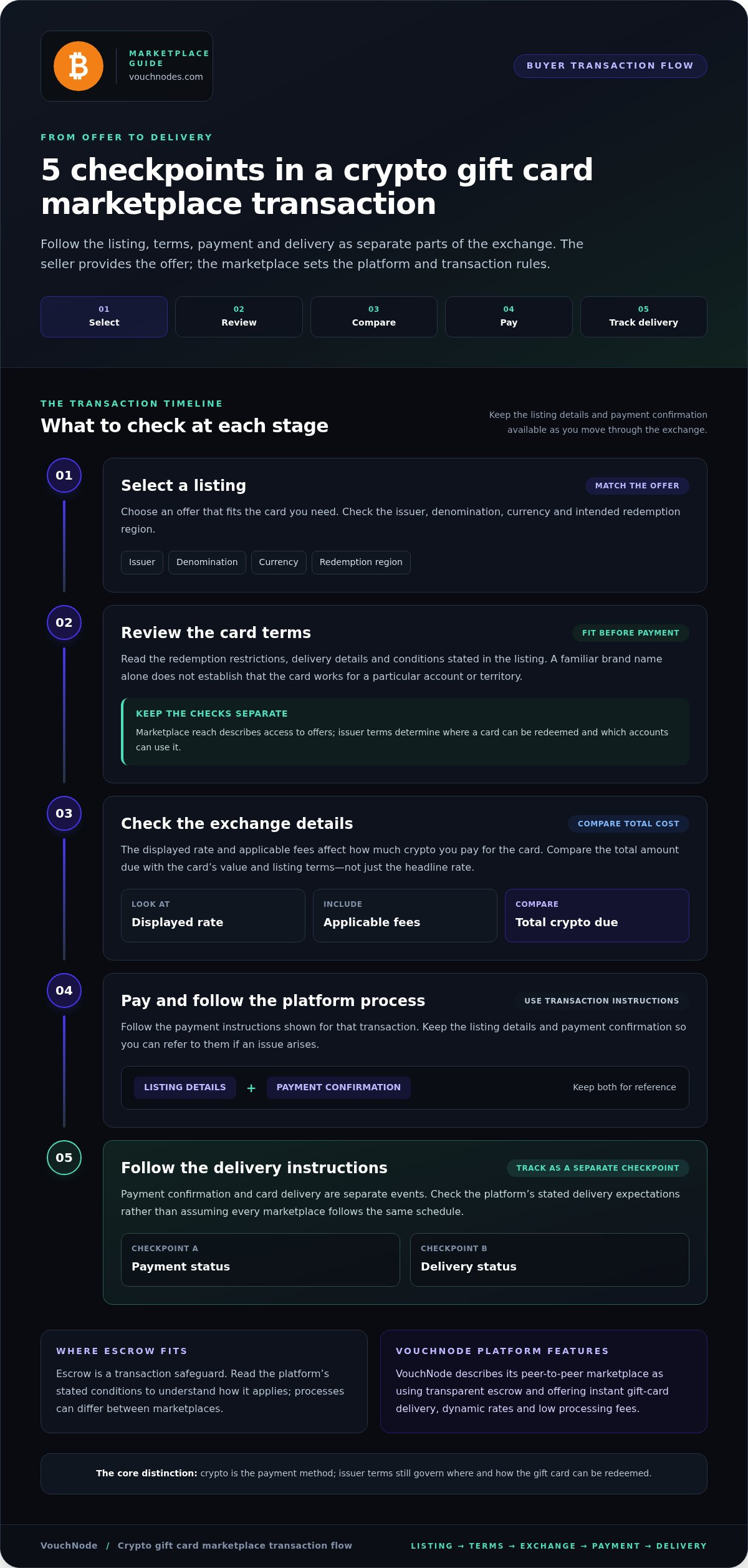
A transaction has distinct stages: the buyer selects an offer, reviews its terms, pays through the marketplace, and follows the delivery instructions. The seller provides the gift card, while the platform establishes the listing and transaction rules. Knowing who handles each part makes it easier to track what has happened and what remains to be done.
What buyers should understand at each transaction stage
- Select a listing. Match the offer to the card you need. Check the issuer, denomination, currency, and intended redemption region.
- Review the terms. Read the redemption restrictions, delivery details, and conditions stated in the listing. A familiar brand name alone doesn’t establish that the card will work for a particular account or territory.
- Check the exchange details. The displayed rate and applicable fees affect how much crypto you pay for the card. Compare the total amount due with the card’s value and listing terms, not just the headline rate.
- Pay and follow the platform process. Use the payment instructions shown for that transaction. Keep the listing details and payment confirmation so you can refer to them if an issue arises.
- Follow the delivery instructions. Payment confirmation and card delivery are separate events. Check the platform’s stated delivery expectations rather than assuming every marketplace follows the same schedule.
Buyers and sellers use the same marketplace for different purposes. A buyer chooses a card offer and pays; a seller presents an offer and completes their part of the exchange under the platform’s rules. The listing connects the two, while its terms set out what is being offered and how the transaction proceeds.
Where escrow and delivery fit into the marketplace
Escrow is a transaction safeguard that structures the exchange between buyer and seller. The platform’s stated conditions explain how it applies. Read those details to understand the steps and handling instead of assuming every marketplace uses the same process.
VouchNode describes its peer-to-peer marketplace as using transparent escrow and offering instant gift-card delivery. These are stated platform features, not a description of every marketplace or a guarantee that every transaction follows an identical timeline. Treat payment status and delivery status as separate checkpoints. Follow the transaction instructions and keep relevant records until you’ve received the card details and checked them against the listing.
For a transaction structure built around peer-to-peer listings, explore VouchNode’s gift card marketplace. Review the offer and its terms before paying, then follow the platform’s stated process from payment through delivery.
How to Compare Crypto Gift Card Marketplaces Beyond Catalogue Size
A large catalogue shows breadth, not whether a particular offer suits your purchase. Compare the card and listing terms first, then assess the full transaction: rate, fees, payment options, delivery expectations, and safeguards. This is a more useful way to evaluate a crypto gift card marketplace than counting brands alone.
Check card suitability before comparing rates
Start with the issuer and denomination. Match them to what you intend to buy, then check the card’s currency, country restrictions, expiry information, and redemption instructions. Amazon, Apple, and Razer Gold cards can each have issuer-specific terms. A recognizable brand doesn’t make those terms interchangeable.
Separate platform-wide statements from listing-level details. A marketplace may describe its overall reach or transaction features, while an individual offer specifies a particular card, denomination, and redemption territory. Use the listing terms to assess that card. A global catalogue doesn’t mean every card can be redeemed in every country.
Compare payment clarity, delivery, and safeguards
Before paying, check which crypto assets the transaction accepts. Compare the displayed rate with any processing fees and the total crypto amount required. A lower rate may be offset by fees or by a card that doesn’t fit the recipient’s account or location. Compare the complete offer, not one number in isolation.
Delivery expectations matter too. Look for clear information about how the card will be delivered and when to expect instructions or card details. Assess safeguards separately: does the platform explain escrow in plain language, and does it describe the steps to follow if there’s an issue? Clear terms help you understand the process, but you still need to follow the platform’s instructions.
| Comparison point | What to assess |
|---|---|
| Card fit | Issuer, denomination, currency, and intended use |
| Redemption region | Country restrictions, eligible account, and issuer instructions |
| Displayed rate | Crypto amount required relative to the card value |
| Fees | Any processing charges shown for the transaction |
| Delivery | Delivery method and stated expectations for receiving the card |
| Safeguards | How escrow and issue-resolution steps are explained |
Apply the same criteria to every option. VouchNode describes its marketplace as peer-to-peer, with transparent escrow, instant gift-card delivery, dynamic rates, and low processing fees. Treat these as platform-level features, then check the terms attached to the individual listing. A sound comparison separates the marketplace’s general model from the specific offer you’re considering.
A Practical Checklist for Choosing a Crypto Gift Card Marketplace
Use this five-point check before choosing a listing. It keeps your decision focused on what you need, what the card allows, and what the transaction involves. Compare the specific offer, not just the marketplace’s headline claims.
- Define the purchase. Identify what the card needs to pay for and who will redeem it. Choose an issuer that fits the purpose, whether it’s shopping, apps, or gaming. A popular brand is useful only if its card works for the recipient’s planned purchase.
- Match the card details. Confirm the issuer, denomination, and currency. Check the redemption country, account or regional conditions, expiry information, and issuer instructions. Don’t infer redemption eligibility from a platform’s global reach. If a term conflicts with your intended use, choose a different listing.
- Review the complete exchange terms. Check the displayed rate, any processing fees, and the total crypto amount required. Confirm which crypto asset the checkout accepts before starting payment. A rate is meaningful only alongside the card value and applicable charges.
- Understand delivery expectations. Read how the card or delivery instructions will be provided and what timing the platform states. Keep payment confirmation separate from receipt of the card. A general delivery claim isn’t a promise about every individual transaction.
- Assess the stated protections. Look for a clear explanation of safeguards, including how escrow works and where to find the platform’s process for transaction issues. Understand the rules before paying, and keep the listing and transaction details for reference.
These checks give you a practical basis for choosing a crypto gift card marketplace. They also help you assess whether an offer fits before focusing on convenience or catalogue size. If the issuer, territory, denomination, payment terms, or delivery details don’t align, the listing isn’t the right fit, even if its displayed rate looks attractive.
How sellers fit into the marketplace model
Sellers provide listings, and buyers select cards for their needs. Clear listing details help both sides understand the issuer, denomination, redemption conditions, and transaction terms. VouchNode’s peer-to-peer marketplace includes transparent escrow, instant gift-card delivery, dynamic rates, and low processing fees. These platform features sit alongside the terms of each listing. Sellers preparing an offer should present its details clearly so buyers can assess whether it meets their needs.
Ready to apply the checklist to live offers? Explore VouchNode’s gift card marketplace and review listing terms before choosing a transaction.
Why Consider VouchNode as Your Crypto Gift Card Marketplace
Choosing a platform involves more than finding a familiar brand. Transaction structure matters too. VouchNode is a global peer-to-peer marketplace for gift cards and other digital goods, connecting buyers and sellers through marketplace listings. This model lets you assess an offer and its terms as part of the transaction, rather than treating crypto checkout as the only deciding factor.
VouchNode’s marketplace model and stated features
VouchNode promotes transparent escrow as a marketplace safeguard and instant gift-card delivery as a platform feature. It also describes its rates as dynamic and its processing fees as low. These are useful comparison points: review the listing, displayed transaction terms, delivery information, and the platform’s explanation of safeguards. The terms of the individual offer still matter.
The marketplace includes gift cards alongside other digital goods, including gaming credits and subscriptions. For a gift-card purchase, keep the issuer’s redemption rules in view. A global marketplace can make listings accessible across markets, but it doesn’t mean every issuer allows redemption in every country or account region. The card’s own conditions determine where and how it can be used.
Peer-to-peer structure is useful when you want to compare individual offers and their terms. It also makes clear that choosing a card involves more than selecting a brand: the listing conditions and platform process shape the transaction. VouchNode’s features give you points to compare, not a reason to skip reviewing the offer itself.
Start with the gift card that matches your intended use
Choose a card based on what you or the recipient plans to purchase. Then review the issuer, denomination, currency, redemption territory, and any stated restrictions. Compare the displayed rate and processing terms with delivery expectations and the platform’s description of escrow. A card that doesn’t fit the intended account or region isn’t suitable, regardless of the marketplace model.
This approach keeps the decision practical: start with the use case, assess the specific listing, and decide whether its terms fit. It also helps distinguish VouchNode’s peer-to-peer structure from direct retail checkout while keeping attention on the transaction details that matter.
Explore the VouchNode gift card marketplace and review the listing terms before proceeding with a transaction.
Set a Clear Standard for Your Next Gift Card Purchase
Make each purchase a deliberate transaction, not a reflexive click on the most familiar brand or lowest displayed rate. Decide what the card needs to do, then use the listing terms to judge whether the offer fits. A consistent approach helps you make clearer choices as your needs change, whether you’re buying for yourself or choosing a digital gift for someone else.
VouchNode offers a peer-to-peer gift-card marketplace with transparent escrow, stated instant gift-card delivery, dynamic rates, and low processing fees. Use these features as comparison points, then read the specific offer before proceeding. The issuer’s redemption conditions still shape how the card can be used.
Ready to put that approach into practice? Explore the VouchNode gift card marketplace and review the listing details for your intended use. A few deliberate checks can make your next crypto gift card marketplace transaction clearer from selection to delivery. Choose the offer that fits your needs.
Frequently Asked Questions
Is a crypto gift card marketplace different from buying a gift card directly?
Yes. In a crypto gift card marketplace, a seller can offer a card through a listing; with direct checkout, the storefront sells from its own catalogue. The difference is who supplies the card and how the offer is structured, not what the issuer’s card can be used for. Compare the listing conditions with the retailer’s checkout terms, then make sure the card suits the recipient.
Can I redeem a crypto gift card in a different country?
Sometimes, but the issuer’s rules determine where the card works. A card bought while traveling may still be limited to the country or account region for which it was issued. Before purchasing for someone abroad, compare the card’s currency and redemption conditions with the recipient’s account settings. A marketplace’s international catalogue doesn’t override issuer restrictions or guarantee cross-border redemption.
Which cryptocurrencies can I use to buy gift cards?
Supported payment assets vary by platform and transaction, so there isn’t one universal list. Check the assets shown at the specific checkout before beginning payment. Follow the instructions precisely, including any network details, and confirm the amount before sending. Don’t assume an asset accepted for one listing is accepted for another, or that a payment can be changed after it has been initiated.
How quickly do crypto gift cards arrive after payment?
Delivery timing depends on the platform and transaction. Payment confirmation doesn’t necessarily mean the card has arrived. VouchNode states that it offers instant gift-card delivery, but this shouldn’t be treated as a guarantee for every transaction. Check the delivery information for the offer, then keep the transaction details until the card arrives and you can verify it matches what you selected.
Are crypto gift card purchases refundable?
Refund eligibility depends on the marketplace’s terms, the listing, and the issuer’s rules. Don’t assume a digital card can be returned after its code has been delivered or revealed. Before paying, look for the stated refund or dispute process and note any applicable conditions. If you’re buying a gift, check the recipient’s intended use first to reduce the chance of choosing an unsuitable card.
What should I do if a digital gift card code does not work?
First, check the code entry, issuer, and account region against the card’s redemption instructions. Don’t post the code publicly or share it beyond the platform’s stated issue process. Keep the listing, payment confirmation, and any error message, then follow the marketplace’s instructions for reporting a problem. Avoid repeated redemption attempts if the issuer displays a restriction or an error that needs review.
Can I sell gift cards for crypto through a marketplace?
Yes. Peer-to-peer marketplaces can let sellers list gift cards for buyers to purchase through the platform. VouchNode facilitates sales of gift cards and other digital goods; its site says sellers can earn up to 20% per purchase. Before listing, provide accurate card details and redemption conditions so buyers can assess whether the offer fits their needs.